Introduction
Phosphate rock is a vital mineral resource widely used in fertilizer production, agriculture, and pharmaceuticals. One of the key characteristics that influences the valuation and processing of phosphate rock is its color. Phosphate rock color can directly indicate its chemical composition, purity level, and presence of impurities. For producers, buyers, and quality control experts, assessing phosphate rock quality based on color is an efficient initial tool. This article provides an in-depth analysis of how different elements affect phosphate rock color and its industrial applications.
Why Does Phosphate Rock Color Matter?
The color of phosphate rock varies due to the presence of different chemical elements. These color variations provide valuable clues about the quality, chemical makeup, and impurities of the rock. This visual indicator is particularly important for fertilizer manufacturers, quality control professionals, and traders.
Moreover, phosphate rock color plays a critical role in export processes, industrial processing, and laboratory analysis as a primary identification parameter.
How Different Elements Influence Phosphate Rock Color
1. Iron (Fe): Shades of Brown to Red
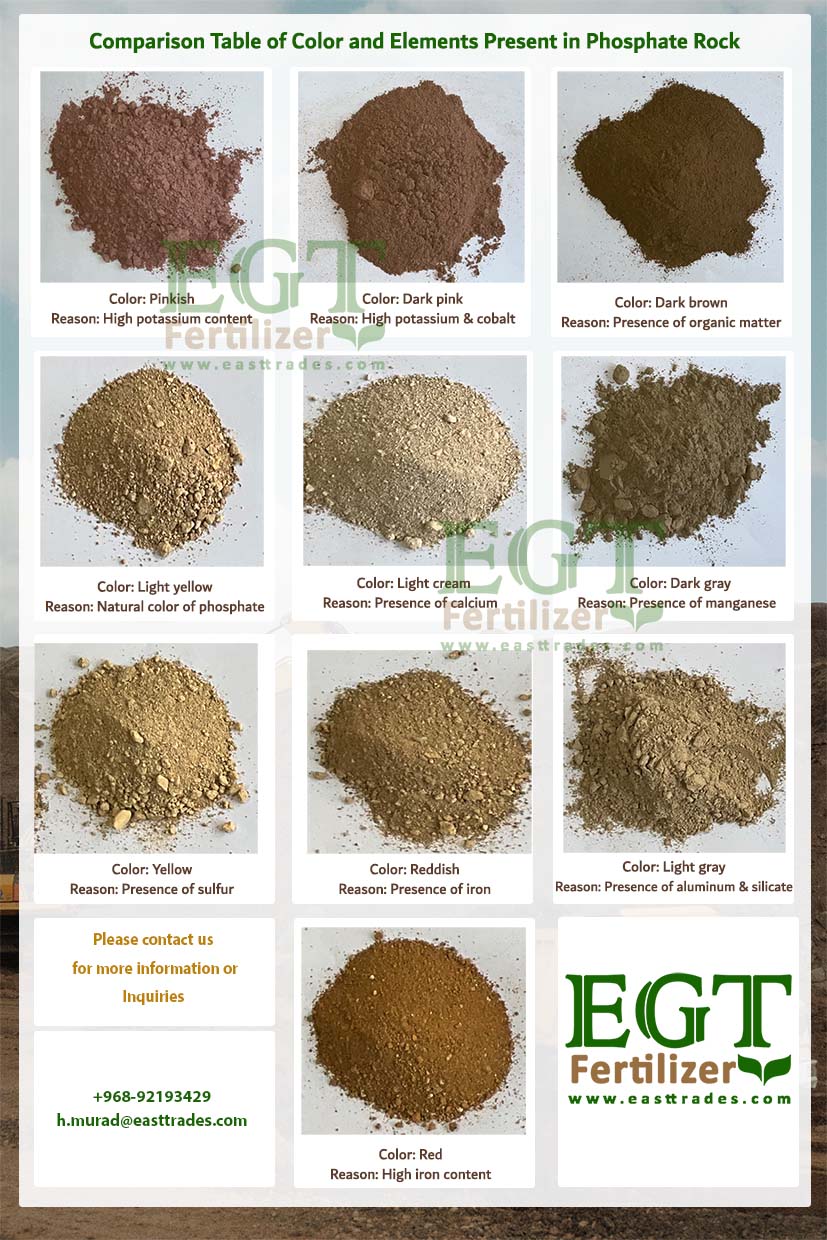
Iron is a common element in phosphate rock that strongly influences its color. Rocks with higher Fe₂O₃ content typically exhibit brown, red, or orange hues. Higher iron content generally results in darker colors.
-
Industrial impact:
High iron levels can introduce unwanted impurities during fertilizer production and phosphoric acid manufacturing, necessitating specialized removal or reduction techniques.
2. Manganese (Mn): Dark Gray to Black
Manganese often imparts dark gray or black shades to phosphate rock. The presence of manganese, especially alongside iron, deepens the coloration and is commonly observed in deposits from arid or remote regions.
-
Quality considerations:
Elevated manganese can signal impurities that adversely affect extraction and purification processes.
3. Aluminum (Al): Pale Yellow to Creamy
Aluminum content can cause phosphate rock to take on pale yellow or creamy tones. Aluminum-rich phosphate minerals affect color and may influence chemical reactions during fertilizer manufacturing.
-
Processing implications:
Aluminum’s presence can reduce process efficiency and complicate fertilizer synthesis.
4. Fluorine (F): Whitish to Bluish Gray
Fluoride-bearing phosphate rocks often appear whitish to bluish gray. Fluorine is a significant component in many phosphate deposits.
-
Industrial concerns:
Excess fluorine must be controlled due to its environmental impacts and influence on fertilizer quality.
5. Silicates: Gray to Greenish Tints
Silicate impurities in phosphate rock typically introduce gray or greenish hues. Silicates can cause operational issues such as sludge formation and require dedicated separation techniques.
6. Heavy Metals (Arsenic, Mercury): Dark Brown to Black
Heavy metals like arsenic and mercury can darken phosphate rock to dark brown or black. These toxic elements pose significant environmental and health risks and must be carefully managed.
-
Environmental & industrial impact:
Stringent monitoring is essential during fertilizer production to minimize contamination risks.
Our Expertise in Supplying High-Grade Phosphate Rock (22-30% P₂O₅)
We specialize in sourcing and supplying phosphate rock with P₂O₅ content ranging from 22% to 30%. Our reliable supply chain sources high-quality phosphate rock from Jordan, Egypt, and Pakistan.
-
Bulk shipping: For large-scale customers requiring extensive volumes.
-
Jumbo bags: Convenient packaging solutions for smaller-scale buyers.
Our expert team offers technical consultation and after-sales support to ensure product quality and meet industry standards.
If you are seeking premium phosphate rock for fertilizer production or other industrial applications, we are ready to provide tailored solutions from trusted origins.
Conclusion
Phosphate rock color serves as a vital indicator of its chemical composition, impurity levels, and overall quality. Understanding the effect of various elements on color is crucial for processing, fertilizer manufacturing, and international trade.
Our company’s capability to supply high-grade phosphate rock (22%-30% P₂O₅) from major producing countries positions us as a dependable partner for all your phosphate needs in Iran.
For inquiries or consultation, please contact us to discuss your specific requirements.